

Research leader
Prof. Dr. Goda Kaniušonytė
Goda Kaniušonytė is a developmental psychologist whose research focuses on adolescent psychosocial adjustment, especially peer and parent–child relationships. She uses advanced longitudinal and statistical methods to study how individual characteristics and social contexts jointly shape development. She is the author of more than 50 peer-reviewed publications in international journals and handbooks. She is a leading expert on longitudinal developmental methodology and the use of advanced statistical techniques for analyzing complex developmental processes. She has led and co-authored several successful grant proposals, including leadership of the NAVIGATE project on school transition and the ECOPALS project on pro-environmental behavior in adolescent peer groups.
Beyond her own research, she is strongly committed to capacity building and collaboration. She supervises doctoral and Master’s students,has served on international PhD committees (e.g., at Florida Atlantic University), collaborated statistically and substantively with PhD students and senior scholars abroad, and contributed to multi-country consortia such as the Horizon Europe project. She has also co-led international training programs for early-career researchers and organized seminars featuring leading scholars in developmental science and methodology, thereby strengthening research capacity in Lithuania and beyond. She has co-developed innovative methodological tools (e.g., peer nomination measures), contributed to research ethics and open science initiatives, and helped design and implement interventions promoting positive youth development and sustainability.
International collaboration is a central feature of her profile. She has served on international PhD committees (e.g., at Florida Atlantic University), collaborated statistically and substantively with PhD students and senior scholars abroad, and contributed to multi-country consortia such as the BIOTraCes Horizon Europe project. She has also co-led international training programs for early-career researchers and organized seminars featuring leading scholars in developmental science and methodology, thereby strengthening research capacity in Lithuania and beyond.
Institute of Psychology
Applied Psychology Research Laboratory
Mykolas Romeris University
godakan@mruni.eu
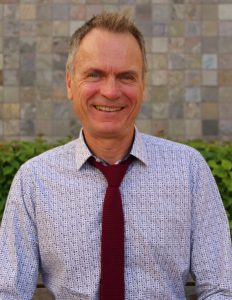
Prof. Dr. Brett Laursen
Brett Laursen is a Professor of Psychology at Florida Atlantic University, USA.
Professor Laursen, besides NAVIGATE+, is currently involved in several longitudinal projects, which focus, in one way or another, on influence within close relationships.
The first project involves a large group of elementary and middle school children from a school district whose population is representative of students in the state of Florida. Over the course of an academic year, students identify changes in friends and changes in behaviors in school, to better understand who is friends with whom and how influence is apportioned within the relationship.
The second project concerns math achievement in a group of Latino students as they transition from grade school into middle school, to identify how transactions between parents and adolescents shape the child’s math interest and abilities. This project is being conducted in
collaboration with Dr. Jill Denner of ETR Associates.
A final set of projects concerns child characteristics that (a) moderate associations from parent reading to early childhood literacy and (b) elicit differential parent engagement in literacy activities. Several studies converging on this theme are underway at the Trygfondens Center for Child Research (Aarhus University, Denmark) under the direction of Professor Dorthe Bleses.
Brett Laursen has received support from the US National Institute of Child Health and Human Development, and the Lithuanian Research Council. His work has also been supported by the US National Institute of Mental Health, the US National Science Foundation and the Jacobs Foundation.
Professor of Psychology
Florida Atlantic University
http://www.psy.fau.edu/laursen-lab/index.php
Docent Professor of Social Developmental Psychology
University of Jyväskylä, Finland
Senior researcher
Applied Psychology Research Laboratory
Mykolas Romeris University
Editor-in-Chief
Merrill-Palmer Quarterly
https://digitalcommons.wayne.edu/mpq/
Founding Editor, Cambridge Elements in Research Methods for Developmental Science
https://www.cambridge.org/pr/academic/subjects/science/psychology/developmental-psychology/series/elements-research-methods-developmental-science

Dr. Gintautas Katulis
Gintautas Katulis is a psychologist and researcher whose work focuses on groups, group dynamics, and youth, with particular attention to how social interactions, relationships, and group processes shape individual behavior, self-concept, and well-being. His research examines how peer relationships, group norms, and social climates influence individual adjustment, especially during adolescence, and how these processes unfold in real-life group contexts.
His core academic interests center on adolescents and group-based settings, especially classrooms and peer groups. He studies group cohesion, peer influence, victimization, and the ways in which group dynamics can either buffer or intensify individual vulnerabilities. Alongside this work, he has expanded into organizational psychology, where he conducts employee engagement and organizational microclimate research, focusing on how group processes and social environments affect motivation, relationships, and functioning within organizations.
Dr. Katulis holds a PhD in Psychology from Mykolas Romeris University, where his doctoral research focused on classroom relationships and peer dynamics among adolescents. He has participated in international research projects, including NAVIGATE, which examined friendship formation and peer relationships during the transition to secondary school.
In addition to his academic work, he is an active practitioner. He works as a psychologist with adolescents, consults schools and organizations, and supports leaders, teachers, and teams in understanding and improving group relationships. His applied work includes assessing group climates, designing and implementing interventions, and translating research findings into practical strategies for educational and organizational contexts.
His work is guided by the belief that groups and relationships are central to both individual development and organizational functioning, and that integrating scientific research with practice is essential for meaningful and sustainable change.
Institute of Psychology
Applied Psychology Research Laboratory
Mykolas Romeris University
gintautas.katulis@mruni.eu
PhD Candidate Vaiva Rimienė
OUR VOLUNTEERS

Emilė Skrinskaitė
Emilė is a Master’s student in Developmental and Educational Psychology. She is interested in psychological safety, personality traits, and social-emotional well-being in educational and work environments. Alongside her studies, she works with kindergarten children, gaining practical experience in supporting child development and positive group relationships. Her interests focus on how supportive environments, group dynamics, and interpersonal relationships contribute to psychological safety, resilience, and healthy development, closely aligning with the objectives of the NAVIGATE+ research project.

Simonas Vaitkevičius
Simonas is a psychology BA student with experience in youth work, educational activities, and volunteering. He enjoys working with people, organizing and leading activities, contributing to community-building, and finding creative solutions. He is also interested in psychological research, data analysis, and the practical application of psychological knowledge. He is responsible, calm, and communicative, and feels comfortable working both independently and as part of a team.